Hebrew, translation, elucidation
The original Hebrew with full nikud, a faithful English translation in bold, and an elucidation that explains each Kabbalistic term and follows the argument step by step.
 Kesser Shem TovPublishing
All seforim awaiting a patron
Awaiting a patron · two volumes
ליקוטי תורה להאריז״ל
Rabbi Yitzchak Luria, the Arizal · as recorded by Rabbi Chaim Vital · with the teachings of the Chabad Rebbeim
Most works of the Arizal’s Kabbalah are arranged by subject — worlds, partzufim, kavanos. Likkutei Torah follows the verses of the Torah itself, parshah by parshah, and opens the inner meaning of its words, its stories and its mitzvos. The Alter Rebbe cites it in the second chapter of Tanya, and the Rebbeim after him returned to it again and again. Here is the sefer on the whole Chumash, in two volumes: the Hebrew fully vocalized, a faithful English translation, and an elucidation that follows every step.
Sponsor or crowdfund a volume See five pages inside
Cover in preparation. Both volumes are typeset.
Why it should be brought to light
Etz Chaim teaches the structure of the worlds and the foundations of the Arizal’s wisdom. Likkutei Torah reaches the same mysteries through the verses and the narratives of the Torah, as recorded by his foremost disciple, Rabbi Chaim Vital, and compiled by Rabbi Meir Poppers. In 466 passages on the five books of the Chumash, it shows how the lives of the Avos, the history of the Jewish people, the mitzvos, and even single words and letters of the Torah carry deep spiritual meaning.
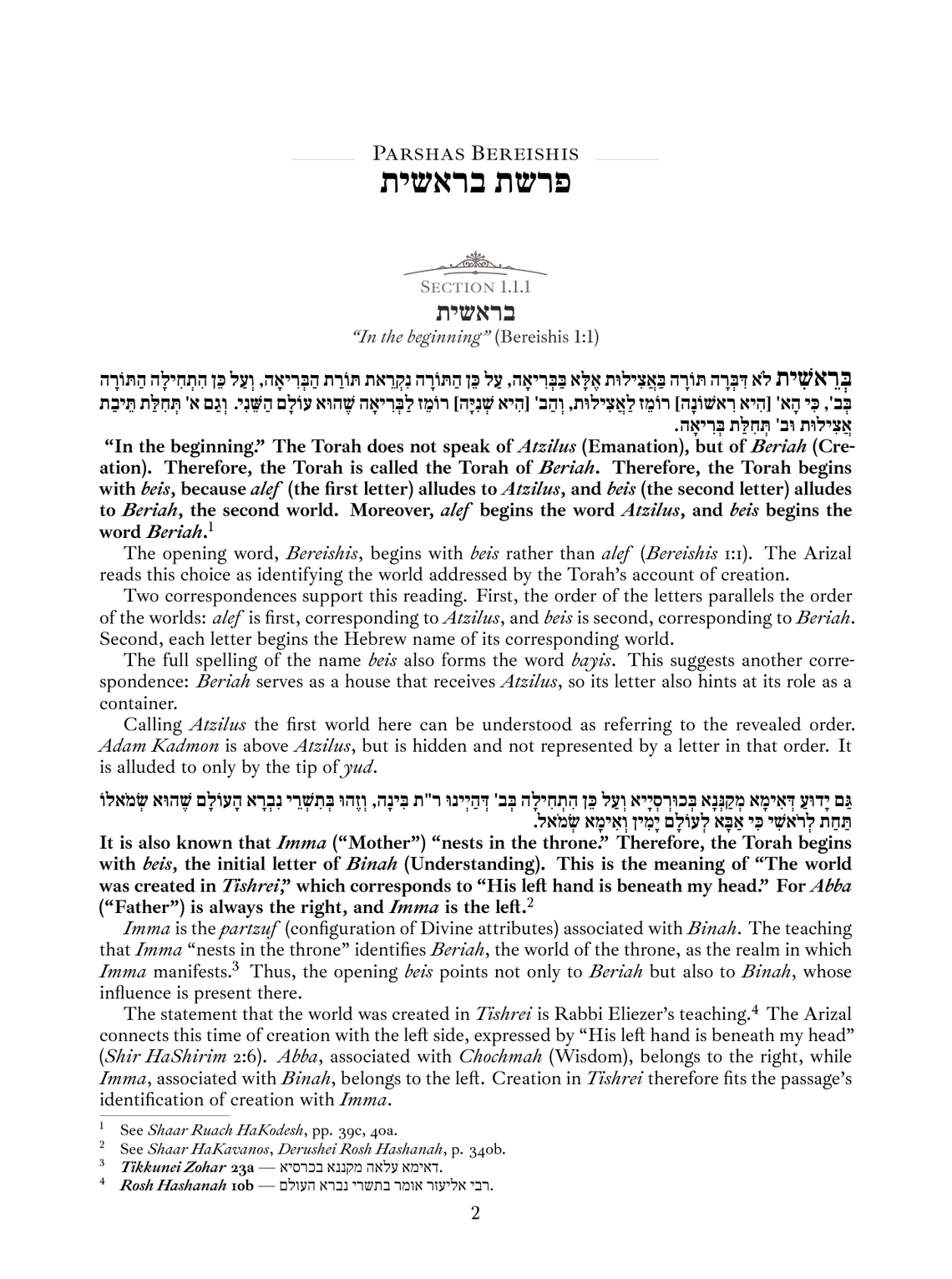
The edition is built around the way the sefer is learned. Each passage opens with the original Hebrew, fully vocalized, then a faithful English translation in bold, then an elucidation that explains the Kabbalistic terms and follows the argument step by step. The longer sections close with a short summary, and the second volume holds a guide to the key concepts of the Arizal’s system, with thirteen diagrams.
For a Chassid, this sefer stands at the root of teachings he already knows. The Alter Rebbe cites it in Tanya and in Iggeres HaKodesh, and a survey made for this edition found more than five hundred references to its passages on the Chumash in the works of the Rebbeim. Selected explanations of the Rebbeim stand beside the passages they explain — always in their own boxes and notes, so that their readings are never put in the Arizal’s mouth.
“I have come only to explain the words of the Baal Shem Tov and his disciples according to the Kabbalah of the Arizal.”
“As the Arizal wrote all this in Likkutei Torah, Parshas Vayeira.”
The edition
The original Hebrew with full nikud, a faithful English translation in bold, and an elucidation that explains each Kabbalistic term and follows the argument step by step.
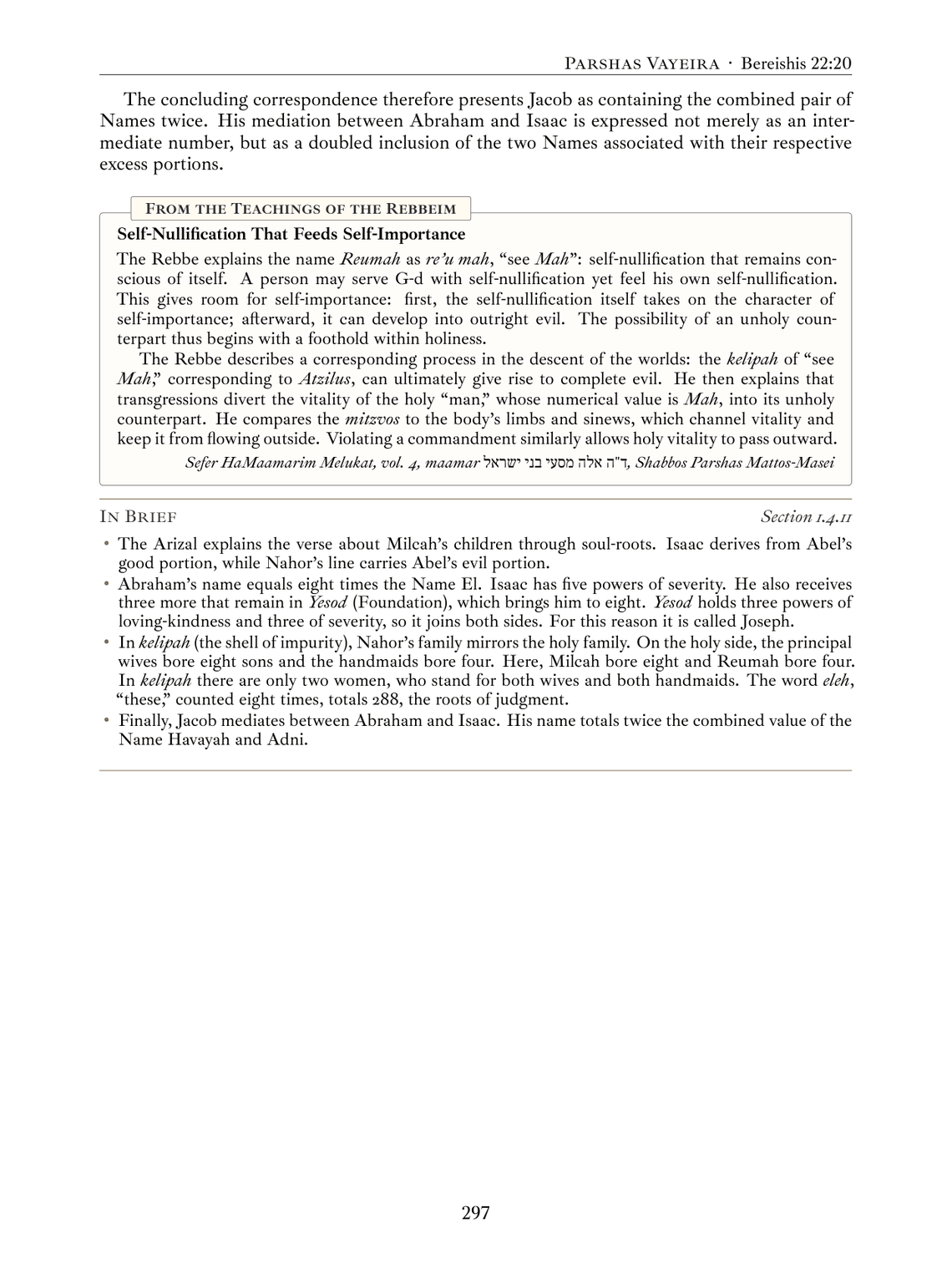
21 boxes and 90 footnotes from the Alter Rebbe, the Mitteler Rebbe, the Rebbe Maharash, the Rebbe Rashab, the Frierdiker Rebbe and the Rebbe — Toras Shmuel, Sefer HaMaamarim, Likkutei Sichos, Toras Menachem and more — each with its exact source, and set apart from the Arizal’s words.
The sources each passage draws on — the Zohar, Etz Chaim, Tanach and the Gemara — checked against the standard editions, with “See” notes to related discussions.
The longer sections close with a short question and a few plain points that restate the teaching, for review and for the reader coming back to it.
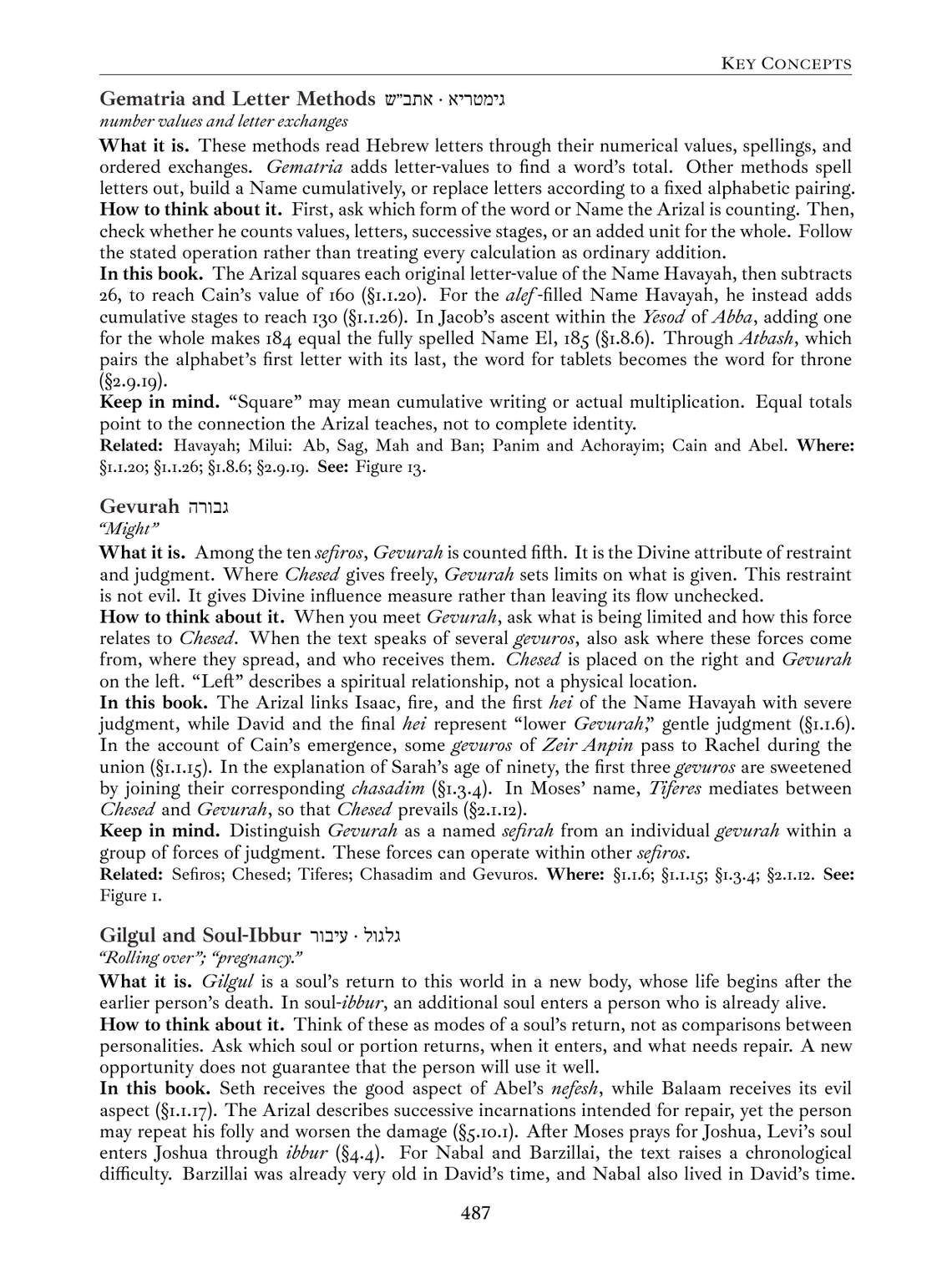
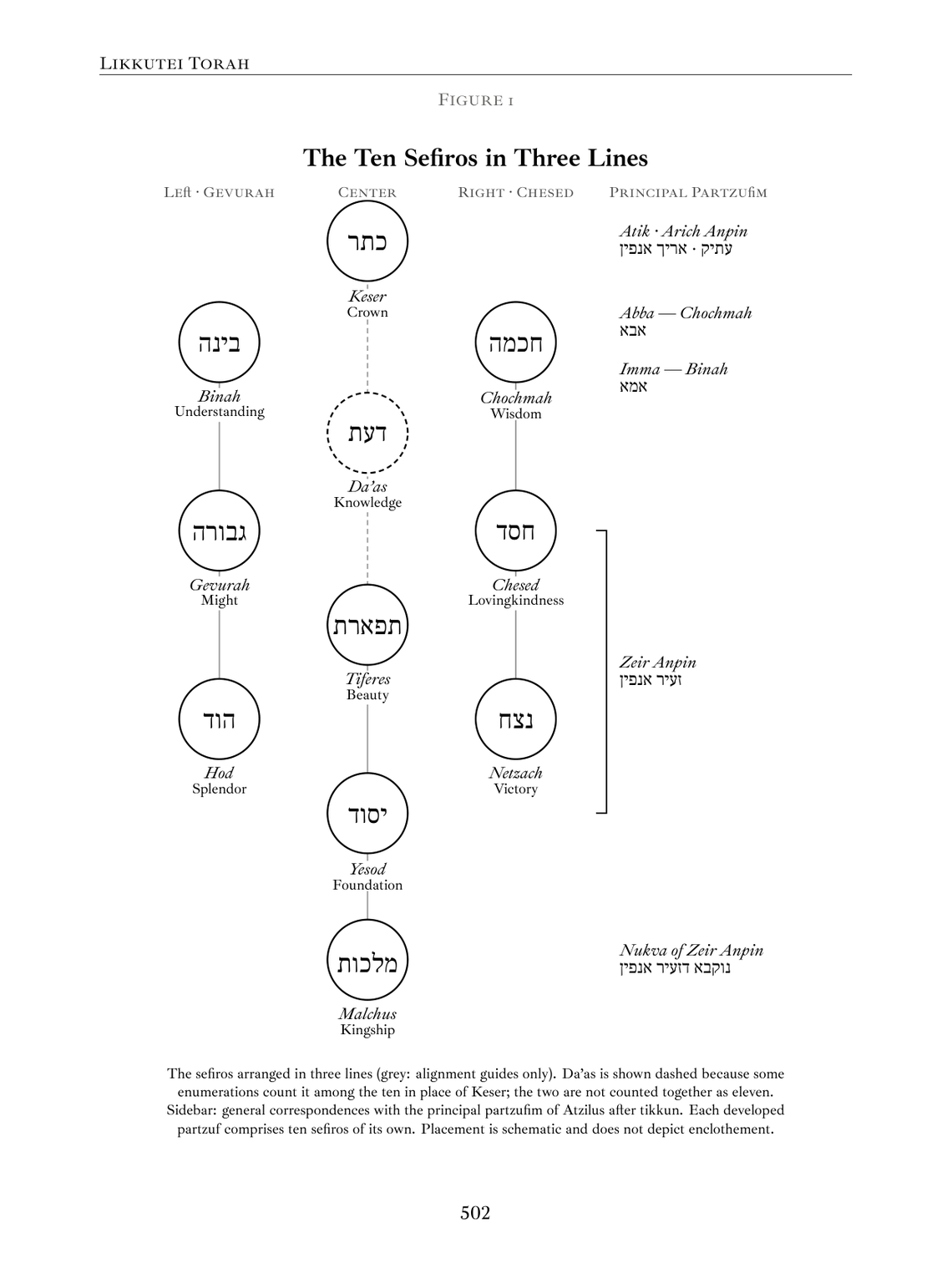
58 entries on the main terms of the Arizal’s system — Abba, Zeir Anpin, Gevurah, Gilgul and more — each with what it is, how to think about it, and where it appears in the book. Diagrams of the ten sefiros, the partzufim of Atzilus, the four worlds, the shattering and the repair.
Volume I, Sefer Bereishis, with a full Introduction on the chain of transmission and the sefer’s place in Chabad Chassidus. Volume II, Shemos to Devarim, with the Key Concepts. Each volume has an Index of Sources and an Index of Subjects.
See it inside
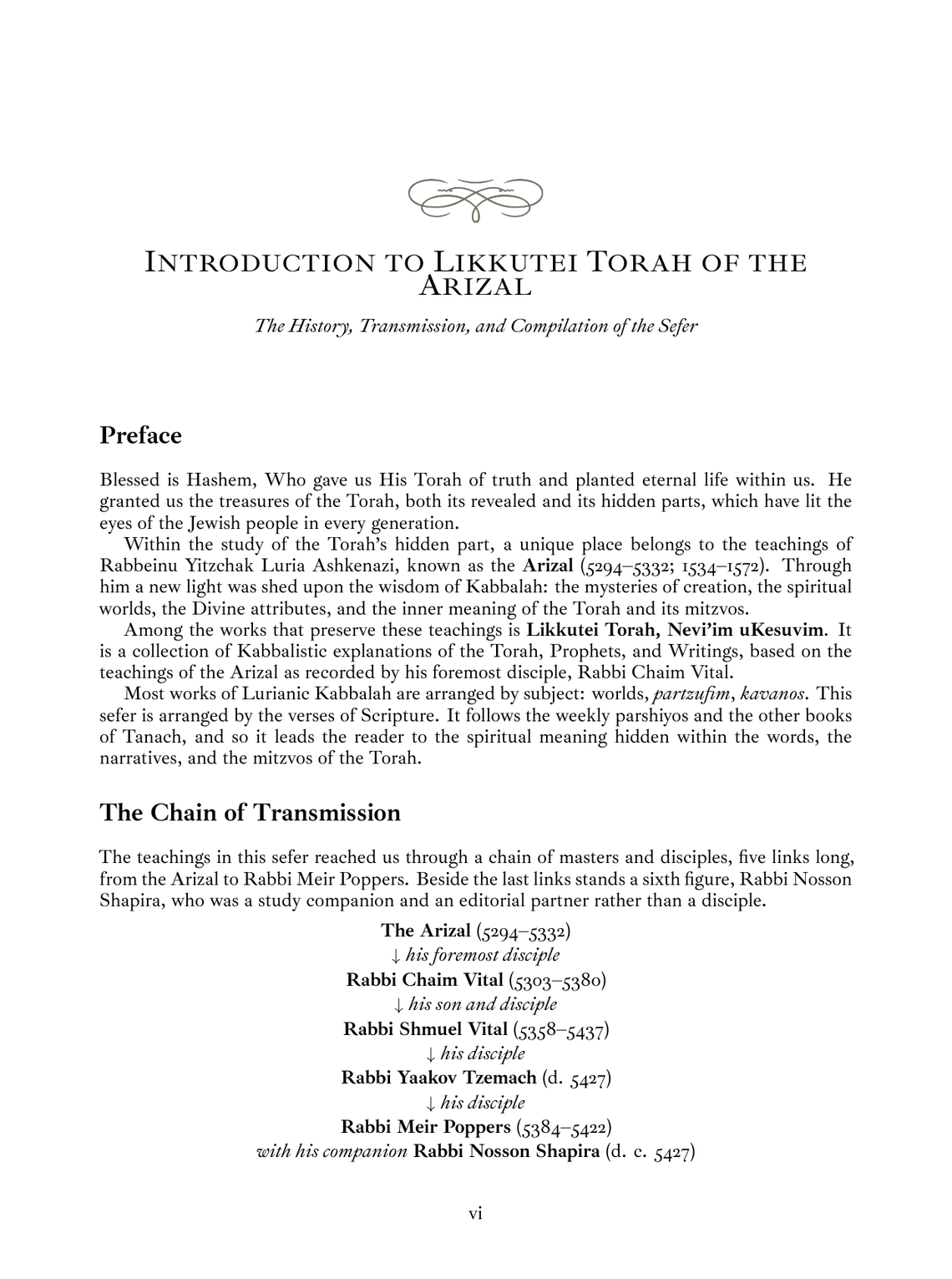
One page from the Introduction; the first page of Parshas Bereishis, with the Hebrew, the translation and the elucidation; a page with a box from the Rebbe and an “In Brief” summary; one page of the Key Concepts; and the first of the thirteen diagrams. Click a page to see it full size.
Sponsorship
The family edition · $2,000 a volume
The volume is published as your family’s edition — your name on the cover banner and title page, with a full dedication plate at the front of every copy, forever.
A share in the sefer
Join a circle of partners who bring the sefer to press together, acknowledged by name on the sponsors’ page of the printed edition.
In honor · in memory
A full dedication page in the front of the sefer — l’ilui nishmas, in honor of a simcha, or in tribute — set in the edition’s own type.
In honor · in memory
A half-page dedication among the tributes at the front of the sefer — a lasting remembrance in a work that will be learned for generations.
Every level is acknowledged in print. Each volume may be dedicated as a family edition for $2,000 — one family for Volume I, one for Volume II, or one family for both. Join the crowdfunding for Volume I below with a pledge of any amount, or write to us for the family edition and the full dedication options.
Become a partner · Volume I
Pledges do not replace the family edition. A family that wishes to dedicate a whole volume can write to us below.
Write to us
Prefer email? Reach us directly at publisher@kstpublishing.com — mention Likkutei Torah of the Arizal, the volume, and the dedication you have in mind.