Vocalized Hebrew
The Midrash’s bold Hebrew set with full nikud, clause by clause — added editorially for this edition, so the text reads aloud as easily as it learns.
 Kesser Shem TovPublishing
All seforim awaiting a patron
Kesser Shem TovPublishing
All seforim awaiting a patron
Awaiting a patron
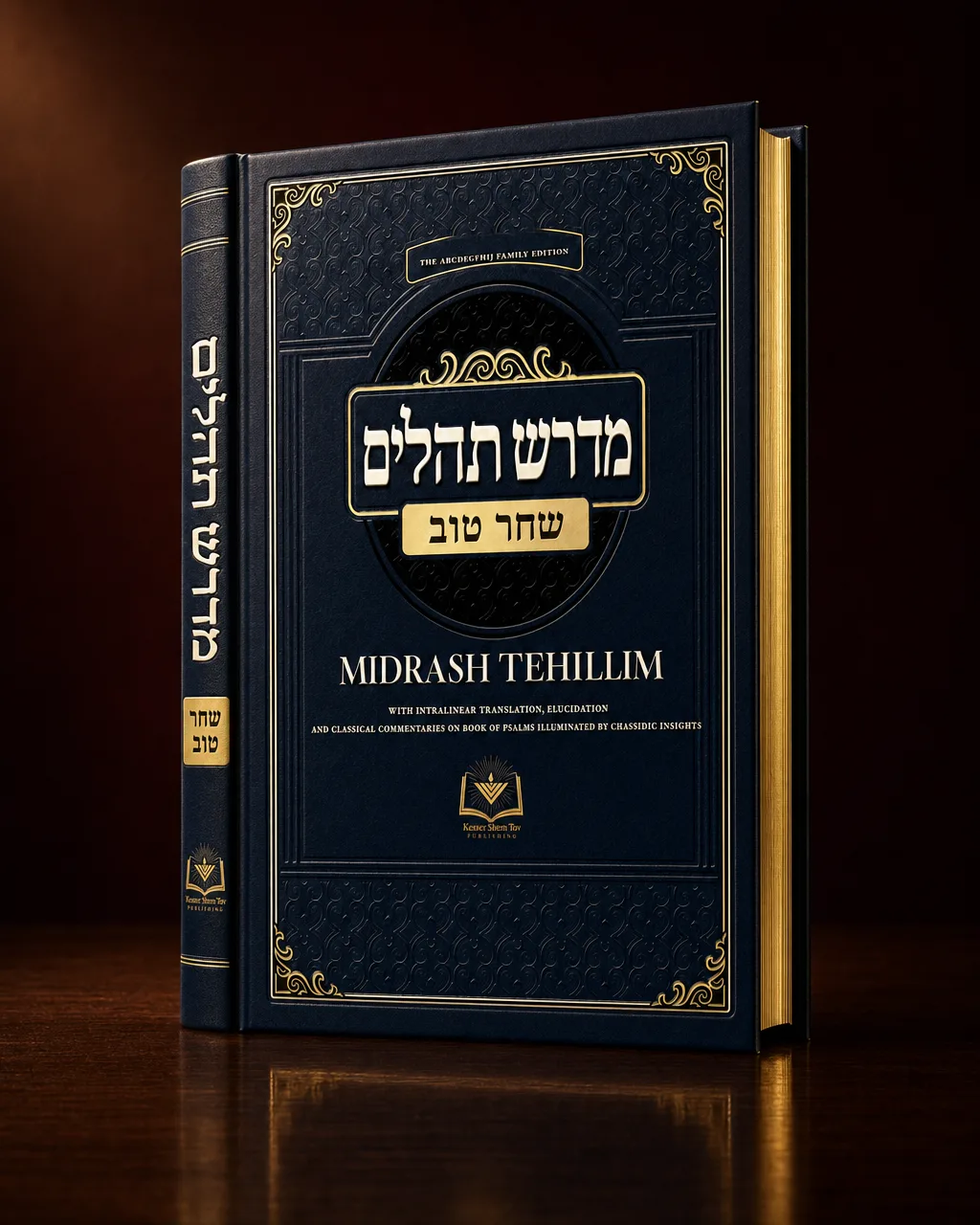
מדרש תהלים · שוחר טוב
The ancient Midrash on the Book of Psalms
Every Jew says Tehillim — in joy, in fear, at a bedside, at the Kosel. Shocher Tov is what the Sages themselves heard inside those words: the ancient Midrash on the Psalms, mizmor by mizmor. This edition opens it in English for the learner — vocalized Hebrew, a faithful translation, a running elucidation drawing on the classic commentators, and a layer of Chassidic light from the Rebbeim.
Why it should be brought to light
Midrash Tehillim — called Shocher Tov after its opening verse — is the Aggadic Midrash on the book of Psalms, arranged mizmor by mizmor across the entire sefer. Verse by verse it unfolds what Chazal heard in Dovid HaMelech’s words: narratives of Dovid, the Avos, and Moshe; readings of prayer, teshuvah, exile and redemption; wordplay, gematria, and the proem-openings that braid the whole of Tanach into every psalm.
Tehillim is the most-said sefer of the Jewish people — and its own Midrash remains one of the least learned, because it has never been opened to the English reader in a traditional elucidated edition. The person who says the words every day has never been shown what the Sages found inside them.
This edition adds a layer no printing of Shocher Tov has carried: Chassidic illumination. Over a hundred places where the Rebbeim — from the Alter Rebbe to the Lubavitcher Rebbe — cite this very Midrash have been gathered and set with the text, including framed “Chassidic Spark” passages, such as the midrash on Psalm 1 that the Rebbe repeatedly invoked as the very foundation of mivtza tefillin. The pilot volume, Psalms 1–5, is complete and typeset; the full Midrash will fill a set of volumes — each one waiting for a name.
Whoever says Tehillim is as one occupied with the deepest chambers of Torah — and Shocher Tov is where the Sages opened those chambers.
The Rebbe repeatedly invoked this midrash as the very foundation of the campaign to put on tefillin.
The edition
The Midrash’s bold Hebrew set with full nikud, clause by clause — added editorially for this edition, so the text reads aloud as easily as it learns.
Each Hebrew clause, its faithful English, and a flowing elucidation that carries the midrash’s argument without interrupting it.
Rashi, Radak, the Metzudos, Malbim, Alshich and Ibn Ezra on the verses the Midrash expounds — folded into the elucidation where they open the passage.
Framed insights where the Rebbeim cite this Midrash — over a hundred sources from the Alter Rebbe through the Lubavitcher Rebbe, always attributed.
A scholarly introduction to each psalm’s midrash — its governing verse, its proem, and the themes it will unfold.
A Subject Index and an Index of Sources close the volume, with compact footnotes keeping every page calm.
See it inside
The sample carries the engraved title plate, the title page, and the opening of the first mizmor — “Fortunate is the man” — with the vocalized Hebrew, translation, elucidation, and the first Chassidic layer.
Sponsorship
The family edition
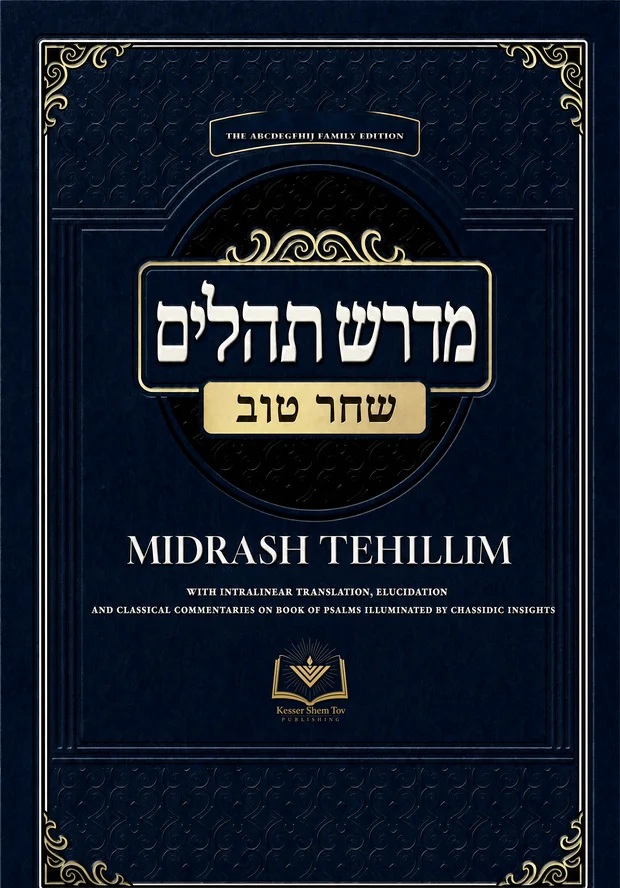
The sefer is published as your family’s edition — your name on the cover banner and title page, with a full dedication plate at the front of every copy, forever.
A share in the sefer
Join a circle of partners who bring the sefer to press together, acknowledged by name on the sponsors’ page of the printed edition.
In honor · in memory
A full dedication page in the front of the sefer — l’ilui nishmas, in honor of a simcha, or in tribute — set in the edition’s own type.
In honor · in memory
A half-page dedication among the tributes at the front of the sefer — a lasting remembrance in a work that will be learned for generations.
Every level is acknowledged in print. Write to us and we will send the dedication options and current amounts for this sefer.
Write to us
Prefer email? Reach us directly at publisher@kstpublishing.com — mention Midrash Tehillim and the dedication you have in mind.